
How to Get High-Quality Custom Packaging Boxes With Fast Turnaround Times?
2026-04-13 18:09:05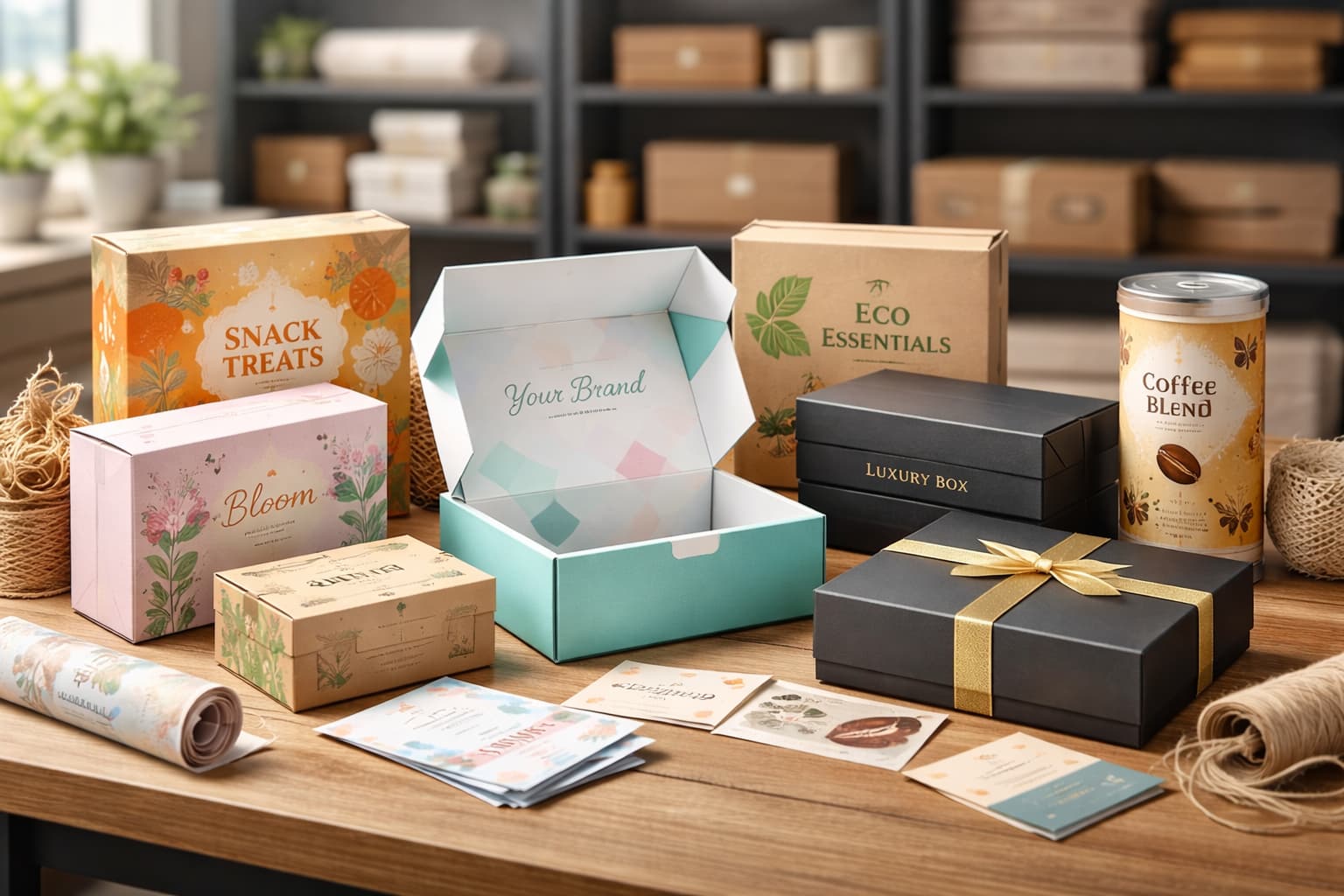
How to Get High-Quality Custom Packaging Boxes With Fast Turnaround Times?
You can get high-quality custom packaging boxes with fast turnaround times by submitting print-ready files, choosing a supplier with in-house production, and streamlining your approval process. Use digital proofs to catch issues early, communicate corrections with specific written notes, and avoid vague feedback that causes delays. Make sure your files are 300 DPI in CMYK with proper bleed zones. The right strategy makes every step faster, and there's a lot more to uncover.
Main Points
Choose suppliers with in-house production and digital proofing systems to eliminate third-party delays and streamline approval workflows.
Submit print-ready files at 300 DPI in CMYK color mode with correct bleed zones to bypass correction queues.
Use digital proofs for early revisions and provide specific written feedback that references exact Pantone numbers and measurements.
Leverage rush-order upgrades such as priority queue placement and pre-cut die templates, and avoid decorative finishes that extend timelines.
Maintain a saved spec sheet and reorder proactively when stock levels reach 30–40% to accelerate repeat-order processing.
Why Most Custom Packaging Boxes Take So Long (And How to Fix It)
Ordering custom packaging boxes should be straightforward, but most businesses quickly discover that long lead times, unclear proofing processes, and supplier miscommunication can stretch a simple order into a weeks-long ordeal.
Most businesses expect a simple order. What they get instead is weeks of delays, miscommunication, and confusion.
The root causes are usually predictable: suppliers juggling high volumes, unclear artwork specifications, and slow back-and-forth approvals.
You can fix most delays before they start. Submit print-ready files in the correct format and resolution upfront. Confirm your supplier's exact file requirements rather than assuming.
Request a dedicated account contact so you're not chasing responses across departments.
Choose a manufacturer that offers digital proofs within 24 to 48 hours, not one that queues proofs behind production schedules. Ask directly about current lead times before placing your order, not after.
Speed comes from preparation on your end and transparency on theirs. When both sides operate efficiently, fast turnaround on high-quality custom packaging becomes entirely achievable. A supplier with dedicated support can also help resolve approval and production questions more quickly, reducing avoidable delays.
What to Look for in a Custom Packaging Supplier With Fast Turnaround
Choosing the right supplier determines whether your packaging arrives on schedule or derails your entire product launch. You need a partner who's built their operation around speed without sacrificing quality.
Before committing, evaluate these three capabilities:
In-house production: Suppliers who control manufacturing internally eliminate third-party delays and communicate production status accurately.
Digital proofing systems: Fast approval workflows using online mockups cut days off the traditional back-and-forth process.
Dedicated account management: A single point of contact who understands your timeline keeps everything moving without miscommunication slowing things down.
Don't just ask about turnaround time — ask for proof. Request references from clients with similar order volumes and complexity.
Check whether they offer rush production as a standard option, not an expensive exception. The right supplier treats your deadline as a commitment, not a suggestion, and builds their process around delivering consistently on time. Suppliers like Hola Custom Boxes also offer rush-order options, helping brands meet tight launch schedules more reliably.
Choose the Right Custom Box Style Before You Contact Anyone
Nailing down your box style before reaching out to any supplier saves time, prevents miscommunication, and positions you to get accurate quotes immediately. Know exactly what you need before you make that first call or send that first email.
Common custom box styles include tuck-end boxes, mailer boxes, rigid boxes, sleeve boxes, and display boxes. Each serves a different purpose. Tuck-end boxes work well for retail products. Mailer boxes suit e-commerce shipments. Rigid boxes signal premium quality. Choose based on your product's weight, fragility, and presentation goals.
You'll also want to confirm your box dimensions beforehand. Measure your product, account for inserts or padding, and determine the exact interior size you need. Suppliers move faster when you arrive prepared.
Finally, decide on your preferred material — corrugated, cardboard, or kraft — so you're not making those decisions mid-conversation. Preparation on your end directly accelerates their turnaround on their end.
How Print-Ready Files Cut Your Custom Packaging Production Time in Half
Knowing your box style and dimensions puts you ahead of the game, but how fast your order moves through production often comes down to one thing: your artwork files.
Submitting print-ready files eliminates back-and-forth revisions, prepress corrections, and approval delays that silently eat days off your timeline.
Here's what makes a file truly print-ready:
Correct resolution – Supply 300 DPI minimum to avoid pixelation on final printed surfaces
Proper color mode – Use CMYK, not RGB, since printers work in CMYK and RGB conversions shift your colors unpredictably
Accurate bleed and safe zones – Extend background graphics 1/8" beyond trim lines and keep critical text inside safe margins
When you hand over a clean, press-ready file, your manufacturer skips the correction queue entirely and routes your job straight to production.
That single step can cut your lead time by several days.
The Custom Packaging Materials That Ship Fast Without Cutting Corners
Material choice shapes your timeline just as much as your artwork files do. Certain substrates move faster through production because suppliers stock them in bulk and machinery handles them efficiently.
Corrugated cardboard and kraft paperboard top the list for fast turnaround. Both materials cut, score, and print reliably without excessive calibration time. Rigid chipboard works well, too, though it typically adds a day or two to production.
You don't have to sacrifice quality for speed. Standard 14pt or 16pt cardstock delivers sharp printing results and sturdy structure without requiring specialty sourcing. E-flute corrugated offers lightweight durability without slowing presses.
Avoid requesting exotic laminates or unusual coatings mid-order. Those finishes require separate processing steps that extend your timeline considerably.
Stick with materials your manufacturer regularly stocks. Ask them directly which substrates ship fastest. That single conversation can save you several production days without compromising the quality of your final packaging.
Rush Order Upgrades That Are Actually Worth the Extra Cost
When deadlines tighten, not every rush upgrade delivers equal value. You'll want to invest strategically, prioritizing upgrades that directly impact delivery speed and structural integrity without unnecessarily inflating costs.
The upgrades genuinely worth paying for include:
Digital proof approval within hours — eliminates back-and-forth delays and locks your design faster, shaving days off production.
Pre-cut die templates — if your supplier already has your box dimensions — mean expedited cutting fees are minimal compared to custom tooling from scratch.
Priority queue placement — paying to move your order ahead in production scheduling consistently delivers faster physical output than any finishing shortcut.
Skip rush upgrades tied to decorative finishes like embossing or foil stamping — those add time, not save it.
Focus your budget on production and logistics acceleration instead. Choosing the right upgrades means you're not just paying for speed — you're actually getting it.
How to Approve Packaging Samples Without Derailing Your Timeline
Sample approval can quietly consume more time than any other stage in the packaging process, so you'll need a streamlined approach before the first physical sample even arrives.
Assign one decision-maker who's final sign-off authority. When multiple stakeholders review samples independently, feedback conflicts and revision cycles multiply fast.
Before the sample ships, send your supplier a detailed checklist covering dimensions, print colors using Pantone codes, finish type, and structural requirements.
When the sample arrives, check every item against that list immediately rather than letting it sit.
Use digital proofs for early structural and artwork revisions, reserving physical samples for final confirmation only. This cuts unnecessary production rounds.
If something needs correction, communicate it the same day with specific written notes and marked photos.
Vague feedback like "the color looks off" wastes time. Instead, reference exact Pantone numbers and precise measurements so your supplier corrects it right the first time.
Supplier Red Flags That Will Blow Your Custom Packaging Deadline
Even with a solid sample approval process in place, it won't save you from missing your deadline if you're working with the wrong supplier. Spotting red flags early keeps your project on track.
Watch for these warning signs:
Vague production timelines — If a supplier can't give you specific lead times upfront, they're likely guessing, and you'll pay for it later.
Poor communication response times — Suppliers who take days to answer basic questions will take longer when real problems arise during production.
No quality control documentation — If they can't show you inspection reports or certifications, you're gambling with consistency on every order.
Once you notice any of these signs, don't assume things will improve. Switch suppliers before you're locked into a contract or a deadline crunch.
The right supplier communicates clearly, delivers predictably, and backs their process with proof—not promises.
How to Reorder Custom Packaging Faster Every Time You Scale
Scaling your business means reordering packaging faster without sacrificing quality or scrambling to rebuild specs from scratch each time.
Set yourself up for speed by keeping a saved spec sheet that includes your dieline, material choices, print colors, and finish preferences. Share this document with your supplier so they can pull it immediately when you're ready to reorder.
Establish a standing relationship with one reliable supplier rather than shopping around every cycle. When they already know your brand standards, approvals move faster and errors drop considerably.
Track your inventory closely so you're never reordering under pressure. Place your next order when stock hits 30–40%, not when you've run out.
Ask your supplier about priority queue options for repeat clients. Many offer faster production slots for established accounts.
The more consistently you order, the more leverage you have to negotiate both speed and pricing as you grow.
Why Brands Trust Hola Custom Boxes for Fast Turnaround Packaging
If speed and quality both matter—and they should—working with an experienced supplier like Hola Custom Boxes can remove most of the friction from your packaging process.
They specialize in fast-turnaround custom packaging with in-house production capabilities, helping brands move from concept to delivery without unnecessary delays. Whether you're launching PR kits, retail packaging, or e-commerce mailers, their streamlined workflow, digital proofing systems, and dedicated support team keep projects on schedule.
You can explore their full packaging solutions here: https://holacustomboxes.com or check out their custom PR packaging options here: https://holacustomboxes.com/product/custom-pr-boxes
Frequently Asked Questions
Can I Get Custom Packaging Boxes With No Minimum Order Quantity?
Yes, you can find suppliers that offer custom packaging boxes with no minimum order quantity (MOQ).
Many online printing companies now cater to small businesses and startups by allowing single-unit orders. You'll typically pay a higher per-unit cost, but it's perfect for testing designs or fulfilling small orders.
Search for providers such as Hola Custom Boxes, noissue, or Arka that specialize in low- or no-MOQ custom packaging solutions.
Do Eco-Friendly Custom Packaging Options Cost Significantly More Than Standard Materials?
Eco-friendly custom packaging doesn't always cost considerably more than standard materials.
You'll typically pay 10-20% more for options like recycled cardboard or kraft paper, but prices have dropped as demand has grown.
If you're ordering in bulk, you can further offset those costs.
Plus, you'll attract eco-conscious customers who're willing to pay a premium for sustainable packaging, making it a worthwhile long-term investment.
What Industries Benefit Most From Investing in Custom Packaging Boxes?
You'll find that retail, food and beverage, cosmetics, electronics, and subscription box companies benefit most from custom packaging.
These industries rely heavily on brand perception and customer experience. If you're in e-commerce, you'll also gain a competitive edge since unboxing moments drive social sharing.
Healthcare and luxury goods brands use custom packaging to communicate quality and build trust with their customers.
Can Custom Packaging Boxes Be Used for Both Retail and Shipping Purposes?
Yes, you can absolutely use custom packaging boxes for both retail and shipping purposes.
You'll want to choose durable materials that protect your products during transit while still showcasing your brand's identity on store shelves.
By selecting the right box style, thickness, and printing options, you're creating packaging that handles rough shipping conditions without sacrificing visual appeal.
It's a cost-effective solution that serves double duty for your business.
How Do Seasonal Demand Spikes Affect Custom Packaging Availability and Pricing?
Seasonal demand spikes, like holidays or peak shopping seasons, drive up costs and stretch lead times considerably.
You'll notice suppliers prioritize bulk orders, leaving smaller businesses waiting longer.
To avoid these issues, plan your orders months in advance, lock in pricing through contracts, and maintain buffer stock.
Building a strong supplier relationship also helps you secure priority production slots before demand overwhelms their capacity.
Final Thoughts
You don't have to choose between quality and speed regarding custom packaging boxes. By selecting the right supplier, submitting print-ready files, and knowing which rush upgrades actually matter, you'll protect your timeline without sacrificing results. Avoid the red flags, nail your sample approvals fast, and set up a reorder system that scales with your business. Start implementing these steps now, and you'll never miss a packaging deadline again.