
Designing Boxes for Sample + Full-Size Combo Packs
2026-06-01 21:15:43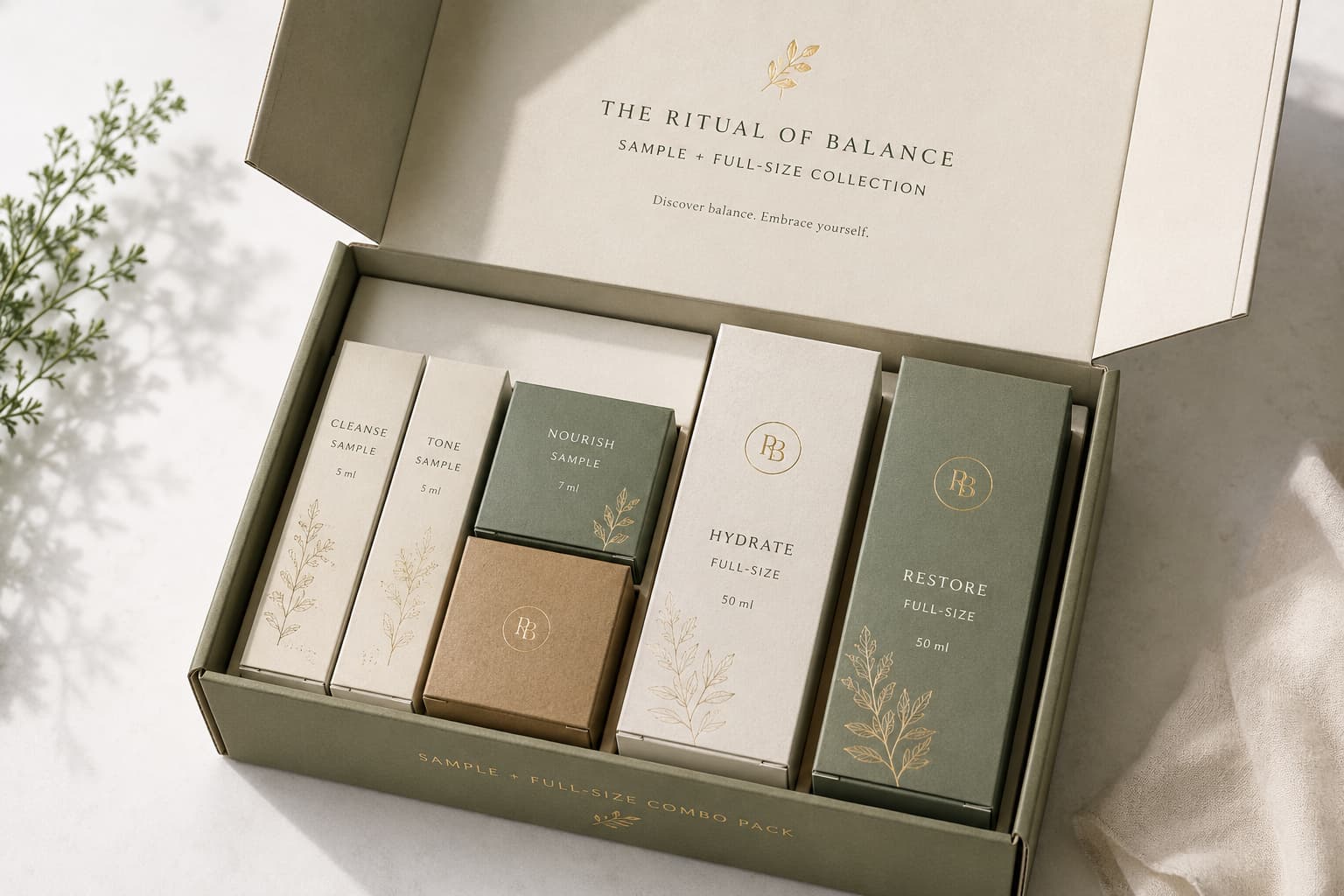
When you're designing boxes for sample and full-size combo packs, think about blending functionality with visual appeal. Use durable materials like cardboard and corrugated paper to protect products while showcasing them. Ensure the structural design allows samples to fit snugly and maintains full-size visibility. Incorporate user-friendly features like easy-open tabs for convenience. Remember, a cohesive visual identity strengthens your brand. Discover more insights to elevate your packaging design and enhance consumer engagement.
Key Takeaways
- Combine lightweight cardboard and sturdy corrugated paper for a durable yet cost-effective packaging solution that protects both sample and full-size products.
- Design tiered layouts to maximize visibility, showcasing samples above full-size products for enhanced consumer appeal and exploration.
- Utilize easy-open tabs and resealable closures to improve user convenience and satisfaction, encouraging repeat purchases.
- Employ consistent color schemes and branding elements to create a cohesive visual identity that attracts attention and reinforces brand presence.
- Gather user feedback regularly to identify desired features and enhance functionality, fostering brand loyalty and improving overall customer experience.
Understanding Combo Pack Packaging Needs
When you design packaging for combo packs, it’s crucial to understand the specific needs that arise from combining multiple products. First, think about the variety of sample sizes you’ll include. Consumers often appreciate trying out smaller versions before committing to full-size products. Tailoring your packaging to showcase these samples can enhance their shopping experience.
Next, consider consumer preferences. Each product in your combo pack needs to complement the others, both visually and functionally. They should be easy to access and securely housed to prevent damage during transport. By focusing on these elements, you can create an appealing package that not only meets your customers’ expectations but also encourages them to explore new products.
Material Selection for Durability and Appeal
Selecting the right materials for your combo pack is essential, not only for durability but also for visual appeal. Consider material types like cardboard, corrugated paper, or plastic, each offering unique benefits. Cardboard is lightweight and cost-effective, while corrugated options provide extra strength, making them ideal for heavier full-size products. Plastic can enhance visual appeal with colors and finishes, but it may compromise recyclability. Focus on durability factors such as thickness, resistance to moisture, and tear strength when choosing materials. Ultimately, the right combination ensures your combo pack withstands shipping and handling while attracting customers. By prioritizing both functionality and aesthetics, you’ll create an appealing package that stands out on the shelves.
Structural Design: Balancing Samples and Full-Size Products
To create an effective combo pack, you need to balance the structural design of samples and full-size products. Start by considering the sample dimensions; they should fit snugly within the box without taking up too much space or compromising the integrity of the full-size items. Think about full-size orientation as well—position these products to maximize visibility and accessibility. You might opt for a tiered design, allowing samples to be showcased above the full-size products, creating a visually appealing hierarchy. Additionally, ensure that the packaging provides adequate support for both sizes, protecting them during shipping and display. This thoughtful approach to structural design will enhance the overall user experience and encourage customers to explore both options.
Visual Branding: Creating a Cohesive Look
Visual branding is essential for creating a cohesive look that resonates with your target audience. By using color psychology, you can evoke specific emotions and associations, enhancing your brand's message. Choose colors that reflect your brand's identity and values, ensuring they’re consistent across all packaging. This consistency helps establish trust and recognition among consumers.
Incorporate your logo and brand elements prominently on the box, maintaining a unified design that aligns with your overall brand aesthetic. Remember, every detail counts, from typography to imagery. By focusing on brand consistency, you create a memorable experience that encourages customer loyalty. Ultimately, a cohesive visual identity not only attracts attention but also reinforces your brand's presence in a crowded marketplace.
Enhancing User Experience With Functional Features
While aesthetics play a crucial role in packaging, enhancing user experience with functional features can significantly elevate your product's appeal. By incorporating elements that prioritize user convenience, you can transform a simple box into an indispensable tool. Consider adding easy-open tabs, resealable closures, or compartments for various sizes. Gather user feedback to understand what features would make their experience smoother and more enjoyable. For instance, if customers struggle with product access, redesigning the box for easier handling can increase satisfaction. Remember, when users find your packaging intuitive and functional, they’re more likely to recommend your product to others. Ultimately, focusing on these functional features not only meets customer needs but also strengthens brand loyalty and boosts sales.
Sustainability Considerations in Packaging Design
As consumers become increasingly aware of environmental issues, incorporating sustainability into packaging design is no longer just a trend—it's a necessity. You should prioritize recyclable materials and explore biodegradable options to minimize waste. Using eco-friendly inks can further reduce your carbon footprint while enhancing your brand’s image. A minimalistic design not only appeals visually but also supports waste reduction by using fewer resources. Consider the entire life cycle of your packaging, from production to disposal, and aim to utilize renewable resources whenever possible. By making these choices, you’ll not only meet consumer demands but also contribute positively to the environment. Sustainable packaging isn’t just good for the planet; it’s good for your business’s future, too.
Testing and Iterating on Packaging Solutions
Incorporating sustainability into your packaging design sets the stage for effective testing and iteration. Start by creating prototypes that align with your eco-friendly goals. Once you have a few designs, gather user feedback to understand what resonates with your audience. This feedback is invaluable; it’ll guide your design iteration process, helping you refine your packaging based on real-world insights. Don’t shy away from making multiple revisions—each iteration should bring you closer to a solution that not only looks great but also meets sustainability standards. Test different materials and designs, and keep an open mind about changes. By prioritizing user feedback and continuous improvement, you’ll create packaging that truly meets the needs of both your customers and the environment.
Conclusion
In the world of packaging, designing combo packs is like crafting a harmonious symphony. Each element—the materials, structure, and visuals—plays its part, creating a melody that captivates the consumer’s senses. By prioritizing functionality and sustainability, you ensure your box resonates long after the last note fades. As you refine your design, remember that each iteration brings you closer to the perfect harmony. Embrace the journey, and let your packaging tell a story that invites exploration and delight.