
ATF & DOT Packaging Guidelines for Ammunition: Compliance, Labeling & Safety Requirements
ATF & DOT Packaging Guidelines for Ammunition: Compliance, Labeling & Safety Requirements
Ship smallarms ammo by classifying it as “Cartridges, small arms” UN0012/UN0014, Division 1.4S. Use DOT-tested UN packaging: certified inner packs, compatible outer cartons, proper cushioning, and follow closure instructions. Mark boxes with UN number, proper name, 1.4S, shipper/consignee, and Limited Quantity diamond when eligible; ORM-D is obsolete. For ground Limited Quantity, most carriers don’t require hazmat papers; observe weight caps (often 66 lb) and adult-signature rules. Document everything for audits. Next, you’ll see exactly how to do it right.
Ammo Shipping Compliance: The 5-Step Checklist
Start with five essentials to keep your ammo shipments compliant: confirm you’re shipping eligible small-arms cartridges, choose DOT-approved packaging, label and mark per 49 CFR (e.g., Limited Quantity or ORM-D where applicable), verify carrier policies and service levels, and document everything for audit trails.
Next, secure cartridges in inner packaging that prevents movement, then place them in strong outer cartons with tight void fill.
Seal boxes with pressure-sensitive tape on all seams. Apply required marks on one side, keeping them legible and unobscured by straps.
Validate the recipient’s age and destination restrictions. Schedule pickup services that accept ammunition.
Keep records of SKUs, quantities, packaging specs, labels, and carrier receipts.
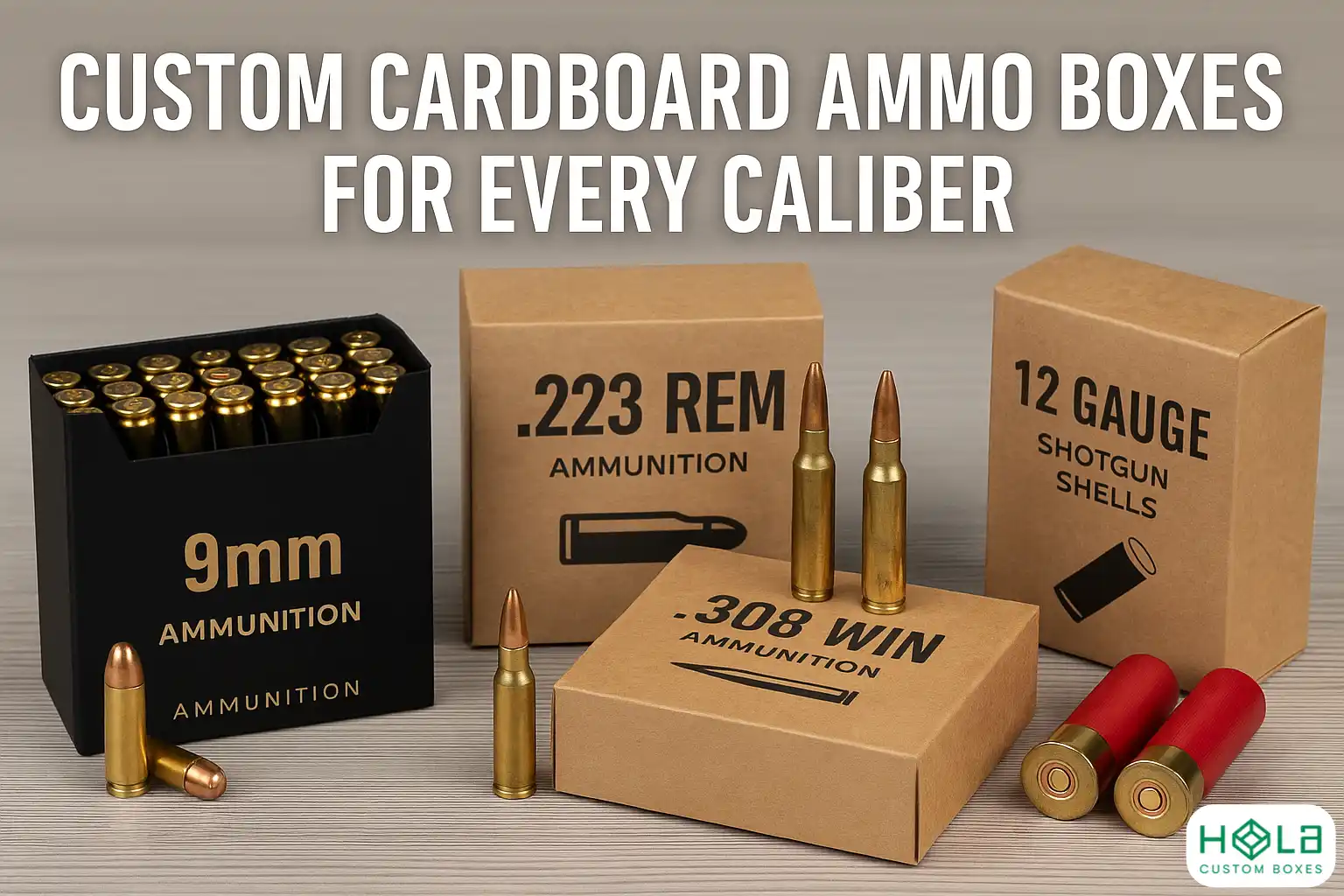
At Hola Custom Boxes, we specialize in manufacturing high-quality custom cardboard ammo boxes that are durable, compliant, and professionally presented. From eco-friendly kraft ammo packaging to premium retail-ready cartons, we help ammunition brands, wholesalers, and private-label manufacturers protect their products while strengthening brand identity. With low minimums, consistent quality control, and free nationwide shipping, we make it easy to source reliable ammunition packaging at scale. Explore our full range of custom ammo box solutions at https://holacustomboxes.com/product/cardboard-ammo-box-manufacturer or learn more about our packaging capabilities at https://holacustomboxes.com.
Classify Your Cartridges: DOT/UN and ATF Scope
Before you box anything, determine exactly what you’re shipping: most consumer ammo falls under DOT/UN “Cartridges, small arms,” UN 0012 or UN 0014, typically Class 1.4S, while blanks and tracers can fall into different hazard divisions.
Confirm the correct Proper Shipping Name, UN number, hazard class, and packing group/exemption status. Identify whether you’re shipping primed cases, inert components, or complete cartridges—DOT treats them differently.
Check if your load qualifies as Limited Quantity or ORM-D legacy is inapplicable. Under ATF rules, small-arms ammunition isn’t an explosive “manufacture” item, but tracers and some incendiaries can trigger explosives definitions.
Document your classification basis and keep records.
Choose Tested Packaging: Inner, Outer, Cushioning
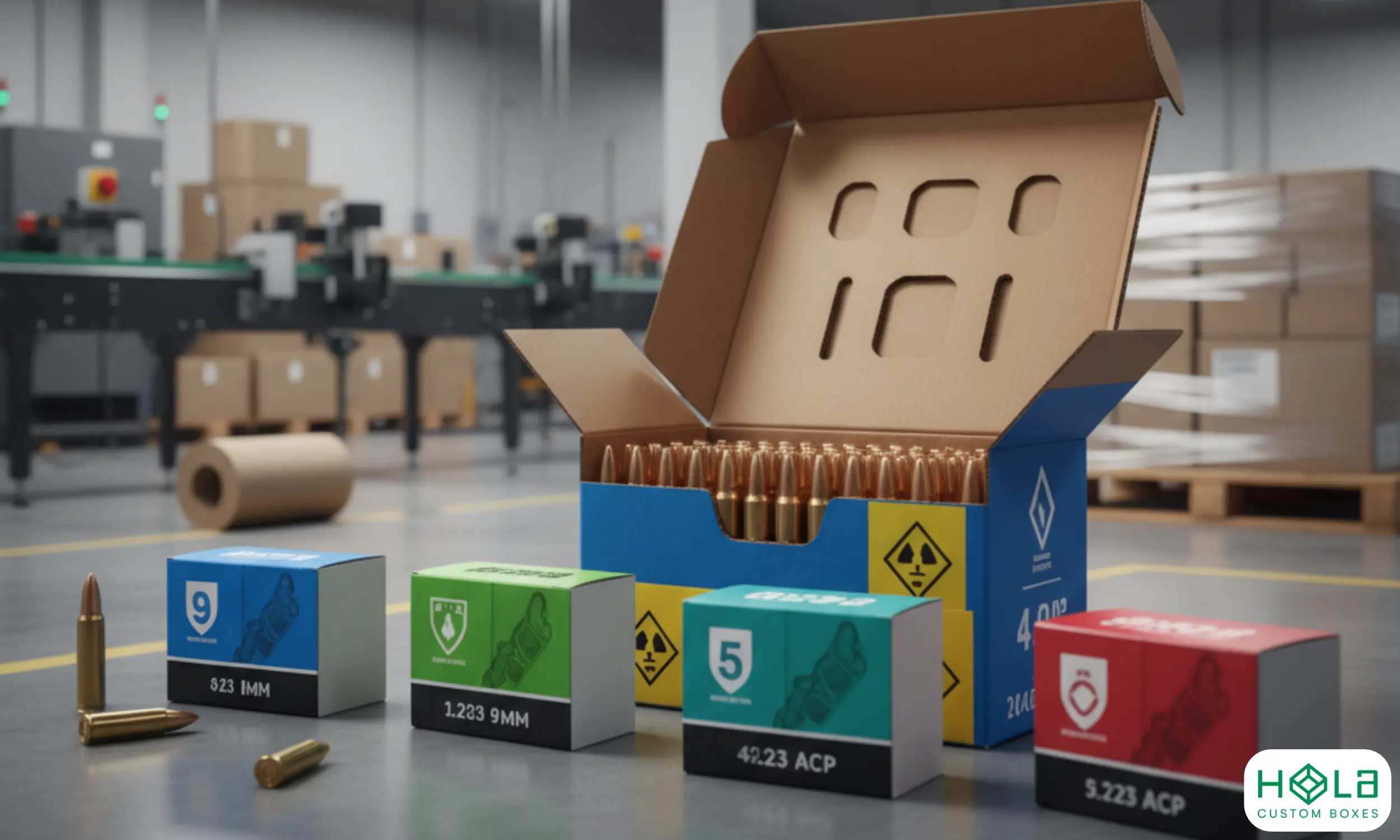
Although your classification drives what’s allowed, compliance hinges on using tested packaging: a certified inner, a compatible outer, and cushioning that passes the required UN performance tests for 1.4S.
Select inners that secure cartridges against movement and impact—trays, fiberboard boxes, or plastic that’s part of a tested design. Pair them with the specific outer box and closure method listed in the packaging’s test report.
Use cushioning that fills voids, prevents contact, and maintains orientation under drop, stack, and vibration conditions. Don’t mix components from different tested kits.
Follow the manufacturer’s closure instructions exactly—tape type, pattern, and quantity—to preserve the certification.
Ammo Shipping Markings, Labels, and Papers
With the packaging certified and closed per the test report, turn to what goes on the box and the paperwork that travels with it.
Mark the proper UN number and proper shipping name: UN 0012, Cartridges, small arms, or UN 0014, Cartridges for weapons, blank.
Add the hazard class/division (1.4S) and the standardized packaging code if required by the report. Include the shipper and consignee addresses, net explosive mass if applicable, and orientation arrows if inner packagings require them.
Prepare the shipping paper: proper shipping description in the correct sequence, hazard class, UN ID, packing group (if assigned), quantity, and emergency contact per 49 CFR.
Keep copies accessible.
Limited Quantity Rules and Carrier Requirements (ORM-D Obsolete)
Since ORM-D is gone, you’ll ship eligible small-arms cartridges under the Limited Quantity provisions instead.
Verify they’re UN0012 or UN0014, Division 1.4S, and packed per Packing Instruction 130. Keep gross package weight within carrier limits (often 66 lb) and use strong, fiberboard boxes with inner cushioning to prevent movement.
Mark one side with the Limited Quantity diamond (black/white), oriented square-on-point; no hazmat shipping paper is needed for ground domestic moves.
Air shipments require full hazmat compliance. Confirm carrier rules: many require adult signature, prohibited PO boxes, and service restrictions.
Train employees per 49 CFR hazmat function-specific requirements.
Frequently Asked Questions
How Do State Laws Affect Retail Ammo Packaging and Display Requirements?
State laws shape ammo packaging and display by dictating age restrictions, secure storage, warning labels, behind-the-counter placement, quantity limits, and ID checks.
You must follow local signage rules, theft-prevention measures, surveillance, and reporting mandates, which can vary widely by jurisdiction.
Are There Temperature or Humidity Storage Limits During Warehousing Before Shipment?
Yes. You should store ammo cool, dry, and stable—typically 55–85°F with relative humidity under 50%.
Avoid temperature swings, direct sunlight, and moisture. Use sealed packaging, desiccants, and rotate stock.
Document conditions to meet warehouse QA standards.
What Training Must Employees Receive to Package and Handle Ammunition Legally?
You must train employees on hazardous materials basics, ammunition classification, authorized packaging, marking/labeling, shipping papers, segregation, handling, emergency response, security awareness, and OSHA PPE.
Provide initial and recurrent DOT hazmat training, document competence, test understanding, and maintain training records.
How Should Damaged or Returned Ammunition Be Repackaged or Disposed of Compliantly?
Handle damaged or returned ammo by isolating it, documenting condition, and following manufacturer guidance.
Use approved containers, segregate components, and label accurately.
If unsafe, render inert or transfer to licensed disposal.
Keep records, update inventory, and train staff.
Do E-Commerce Marketplaces Have Additional Ammo Packaging and Listing Restrictions?
Yes. You’ll face platform-specific ammo rules: prohibited calibers, seller vetting, age/ID checks, hazmat shipping carriers, ORM-D/LQ markings, signature confirmation, restricted destinations, compliant images, SKU accuracy, and policy audits.
Always review each marketplace’s firearms/munitions policy before listing.
Final Thoughts
You’ve got everything you need to ship ammo safely and legally. Classify your cartridges correctly, pick tested inner and outer packaging with proper cushioning, and apply the right marks, labels, and documentation. Follow limited quantity rules, remember ORM-D is obsolete, and meet each carrier’s requirements. Double-check ATF scope and DOT/UN specs before you ship. When you build compliance into your process, you’ll protect people, avoid fines, and keep your operation running smoothly with confidence.
At Hola Custom Boxes, we specialize in manufacturing high-quality custom cardboard ammo boxes that are durable, compliant, and professionally presented. From eco-friendly kraft ammo packaging to premium retail-ready cartons, we help ammunition brands, wholesalers, and private-label manufacturers protect their products while strengthening brand identity. With low minimums, consistent quality control, and free nationwide shipping, we make it easy to source reliable ammunition packaging at scale. Explore our full range of custom ammo box solutions at https://holacustomboxes.com/product/cardboard-ammo-box-manufacturer or learn more about our packaging capabilities at https://holacustomboxes.com.

