
Multi-Caliber Packaging Solutions: Universal, Adjustable & Custom Divider Systems
2026-02-25 14:29:02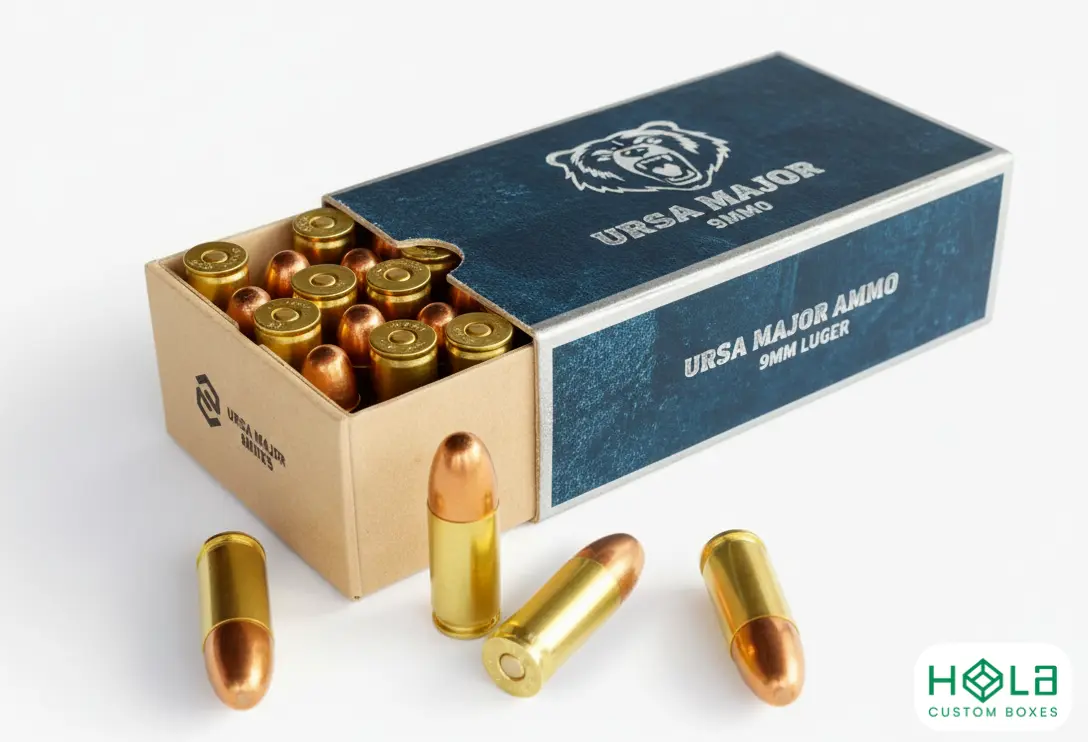
Multi-caliber packaging solutions provide a versatile and structured way to organize, secure, and transport different ammunition calibers within one engineered system. When developed with a professional Hola Custom Boxes, these systems are not generic cartons—they are purpose-built packaging platforms designed to adapt to multiple SKUs while maintaining structural integrity, barcode clarity, and regulatory compliance.
With adjustable and custom divider systems, each caliber remains securely separated, minimizing movement, preventing primer-to-primer contact, and reducing internal abrasion during transport. These systems simplify access while maximizing storage efficiency, whether the packaging is intended for retail shelves, warehouse storage, or field deployment.
For engineered solutions from a trusted Cardboard Ammo Box Manufacturer, explore:
https://holacustomboxes.com
https://holacustomboxes.com/product/cardboard-ammo-box-manufacturer
What Is Multi-Caliber Packaging?
Multi-caliber packaging refers to a structural packaging solution designed to accommodate various ammunition calibers within a single organized format. Instead of producing separate carton structures for every SKU, a universal or semi-adjustable design incorporates modular dividers, partitions, or inserts that adapt to different cartridge sizes.
At Hola Custom Boxes, these systems are engineered using corrugated, SBS, or kraft substrates depending on distribution demands. Adjustable divider geometry allows brands and distributors to configure internal compartments based on changing inventory requirements. This adaptability enhances logistical efficiency and simplifies inventory management across product lines.
Rather than treating each caliber as a separate packaging challenge, multi-caliber systems create a unified structural platform that supports operational flexibility without sacrificing performance.
Key Benefits of Multi-Caliber Packaging Systems
One of the most significant advantages of multi-caliber packaging systems is streamlined organization. Traditional single-caliber cartons require separate storage zones and SKU tracking. A properly designed universal divider system reduces warehouse fragmentation and improves picking accuracy.
Custom divider systems also increase protective performance. By immobilizing cartridges inside precisely measured compartments, internal shock transmission is minimized during drops and vibration cycles. This is particularly important for parcel and LTL distribution environments.
Another benefit is scalability. As brands introduce new grain weights or calibers, adjustable partition systems can often be modified without redesigning the entire outer carton. This reduces tooling costs and speeds product rollouts.
From a retail perspective, multi-caliber packaging supports cleaner planograms and more efficient shelf restocking. From a distribution perspective, it improves cube utilization and reduces void space.
Applications of Multi-Caliber Packaging Across Industries
Although most commonly associated with ammunition packaging, multi-caliber structural systems extend across several industries.
In the defense and tactical sectors, these systems ensure secure containment of varying calibers while maintaining transport compliance and traceability. Adjustable inserts provide controlled separation for mixed loads.
In automotive and industrial manufacturing, similar partition systems organize components of different sizes within one master carton, preventing impact damage during shipping.
In pharmaceutical distribution, divider systems are used to protect vials of varying dimensions, maintaining separation while maximizing carton density.
Agricultural packaging benefits as well, with modular partitions supporting seed varieties of different sizes within consolidated packaging formats.
Across industries, the principle remains consistent: a flexible internal structure increases efficiency while preserving protection standards.
How to Choose the Right Multi-Caliber Packaging Solution
Selecting the correct multi-caliber packaging begins with evaluating dimensional variation. Cartridge length, diameter, and weight influence partition design and material selection.
Compression targets should align with pallet stacking requirements. Drop and vibration exposure must be considered when defining divider thickness and board grade. Moisture conditions within storage facilities also affect substrate choice.
At Hola Custom Boxes, engineers typically begin by analyzing load case data—round count per box, stacking height, transport method, and retail display needs. Divider geometry is then optimized to balance immobilization and ease of access.
Durability should not be compromised for flexibility. Adjustable partitions must lock securely into place, preventing shift under vibration. Material selection—whether corrugated with E or B flute, kraft paperboard, or SBS—depends on whether the system is retail-facing or ship-ready.
Regulatory labeling and barcode zones must also remain unobstructed by divider placement.
Future Trends in Multi-Caliber Packaging Technology
Multi-caliber packaging continues to evolve with advances in materials, sustainability, and automation.
Smart packaging technology is beginning to integrate track-and-trace features into carton structures. Serialized barcodes and QR systems allow real-time inventory visibility across multi-caliber configurations.
Sustainability initiatives are influencing substrate selection, with increased use of FSC-certified corrugated and recyclable divider inserts. Lightweighting strategies are being applied to reduce material consumption while maintaining ECT and compression targets.
Automation is also reshaping production. Die-cut divider systems are now optimized for faster assembly and improved pack-out speed, reducing labor costs in fulfillment environments.
As distribution networks grow more complex, adaptable packaging platforms will become increasingly valuable.
Frequently Asked Questions
What materials are commonly used in multi-caliber packaging solutions?
High-density corrugated board, SBS folding carton stock, and unbleached kraft paperboard are most common. Material choice depends on compression needs, print requirements, and environmental exposure.
How do I maintain multi-caliber packaging systems?
Routine inspection for divider wear, ensuring partitions remain securely fitted, and storing cartons within recommended humidity ranges help maintain performance.
Are there limitations to multi-caliber packaging?
Design must account for size variation limits. Excessive dimensional differences between calibers may require multiple divider configurations.
Can multi-caliber systems be reused or recycled?
Yes, most corrugated and paperboard-based systems are recyclable. Reusability depends on wear conditions and regulatory considerations.
Is multi-caliber packaging more cost-effective than traditional solutions?
When properly engineered, multi-caliber systems reduce tooling redundancy, warehouse fragmentation, and excess inventory, often lowering long-term packaging costs.
Final Thoughts
Multi-caliber packaging solutions offer a structured and efficient way to manage multiple ammunition SKUs within one engineered system. By integrating universal or adjustable divider configurations, brands and distributors gain flexibility without sacrificing protection.
When developed by Hola Custom Boxes, these systems combine structural integrity, compliance readiness, and operational efficiency. Rather than redesigning cartons for every caliber variation, a well-designed multi-caliber platform supports scalable growth and streamlined logistics.
If you are seeking adaptable packaging from a proven Cardboard Ammo Box Manufacturer, explore:
https://holacustomboxes.com
https://holacustomboxes.com/product/cardboard-ammo-box-manufacturer
Optimized internal structure leads to better protection, faster fulfillment, and stronger supply chain performance.